Fathom syncs meeting insights automatically with the tools your team uses. Zero friction, maximum flexibility.

Use case: Voice of customer program
Fathom turns your team’s customer calls into a running voice of customer program, surfacing the requests, pain points, and praise that keep coming up and sending them to the teams that act on them.
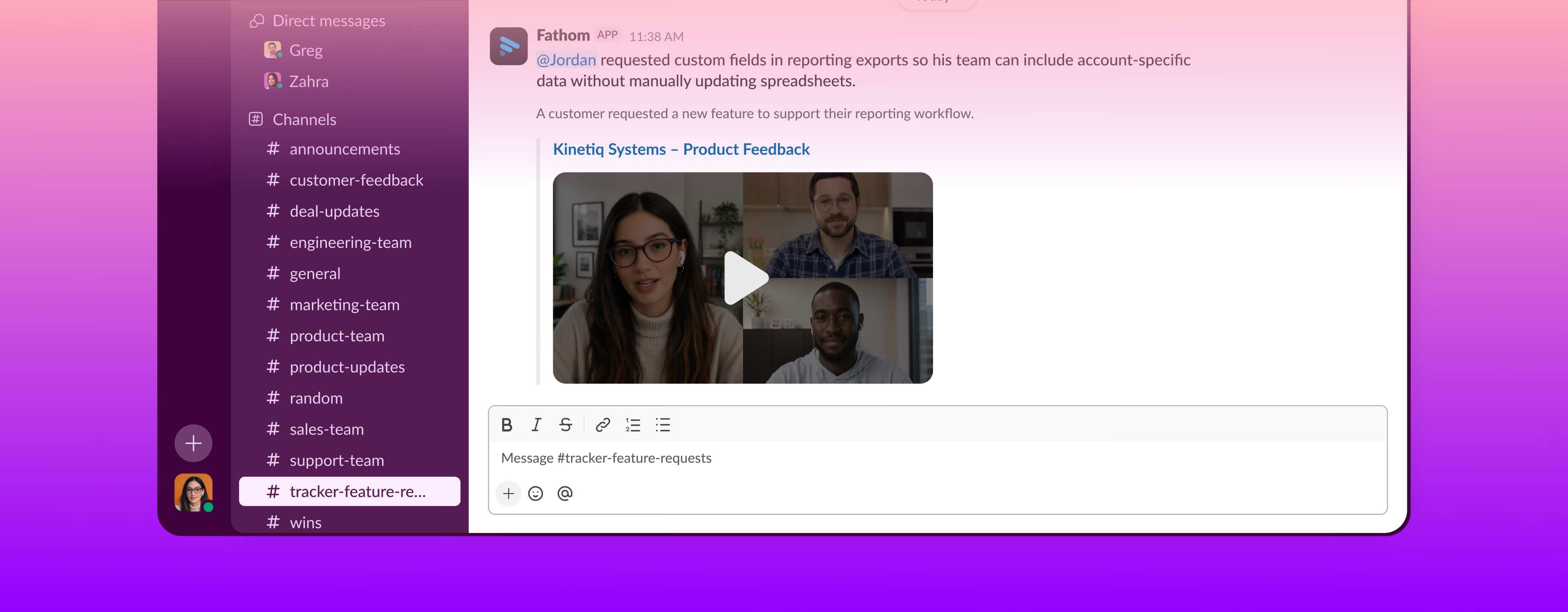


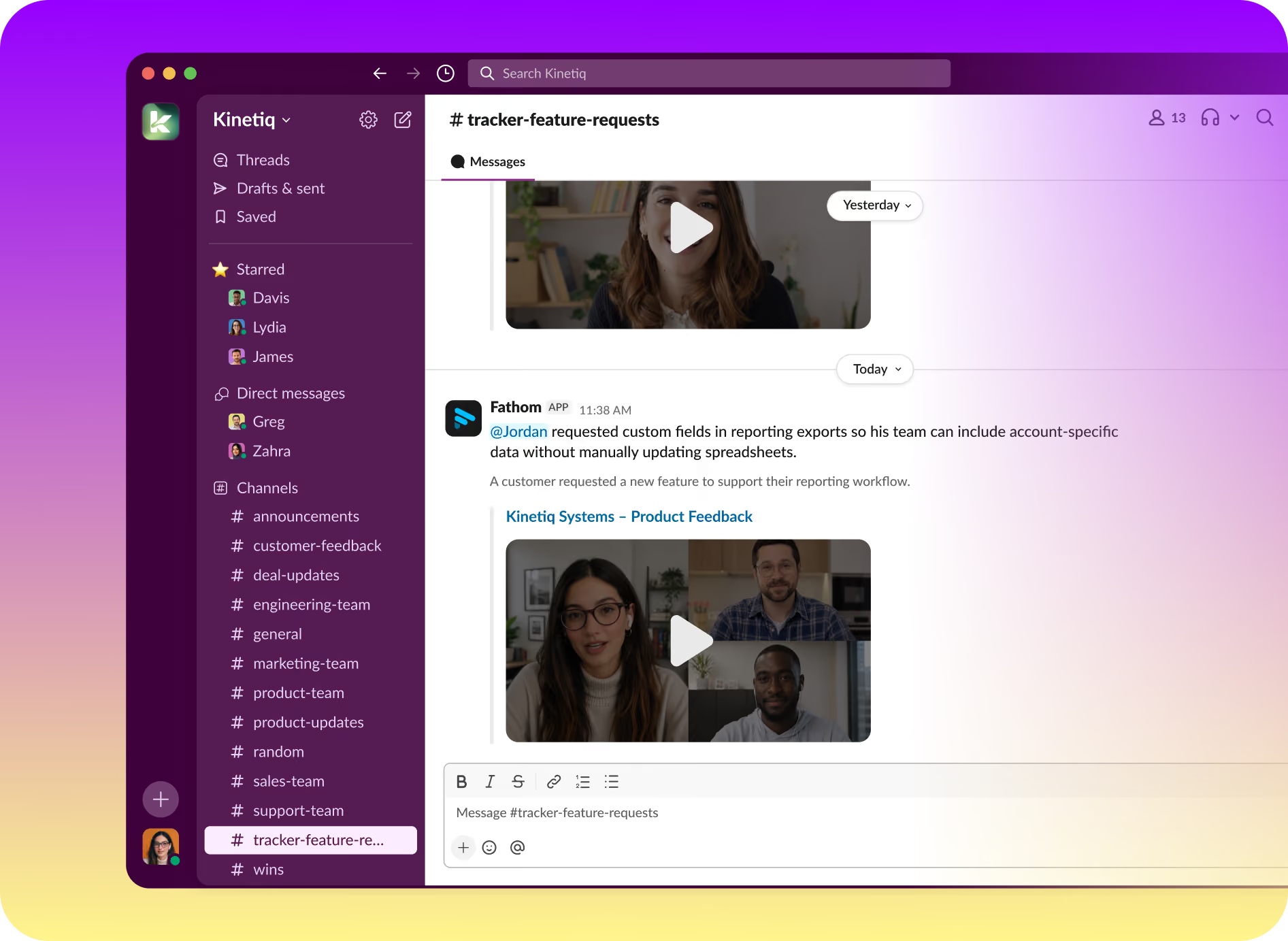
Create a Tracker for any theme: a feature request, an onboarding pain point, a reaction to new pricing. Fathom recognizes the idea in context, not only the keyword, and posts each moment to Slack or a weekly digest.
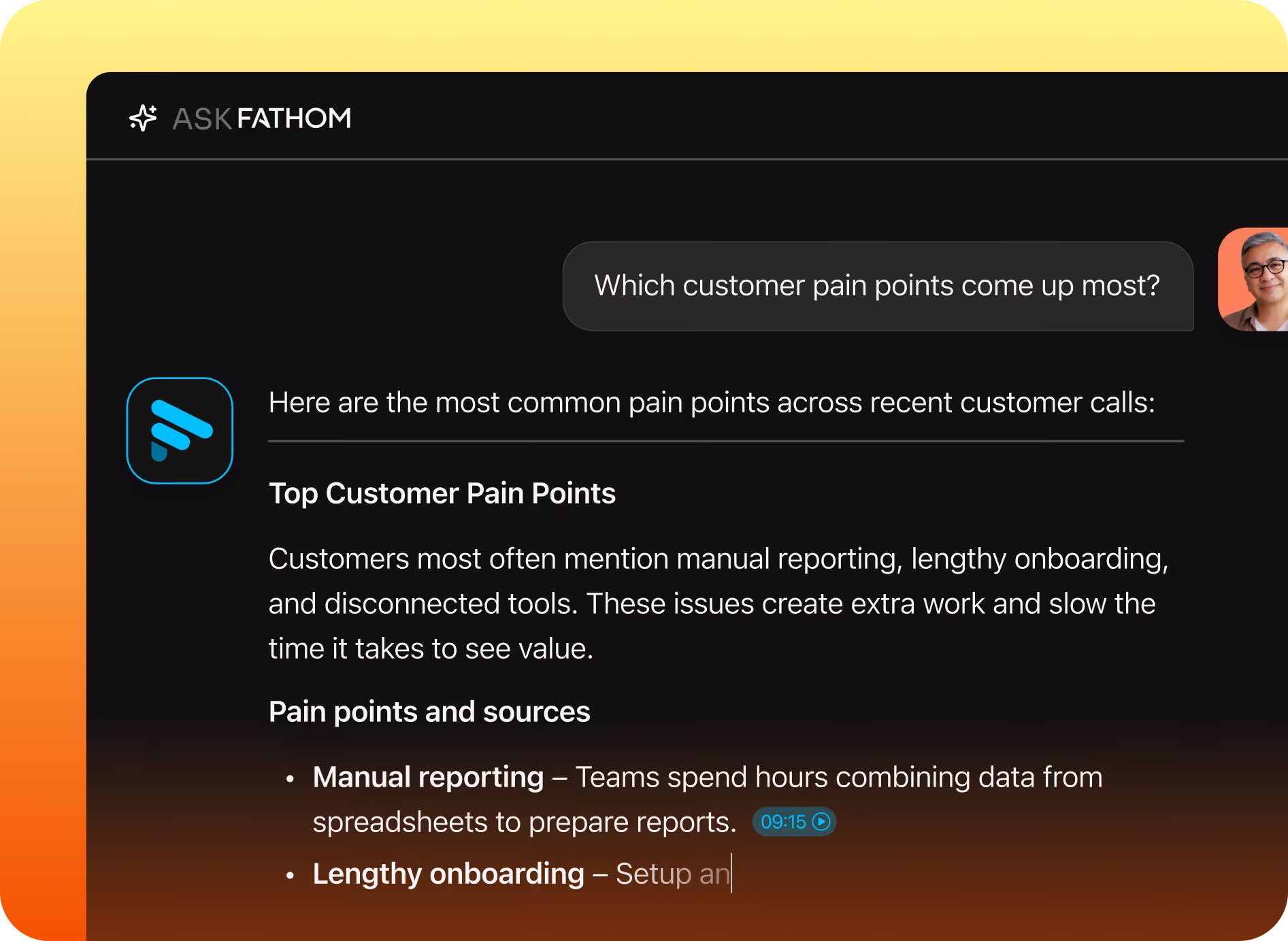
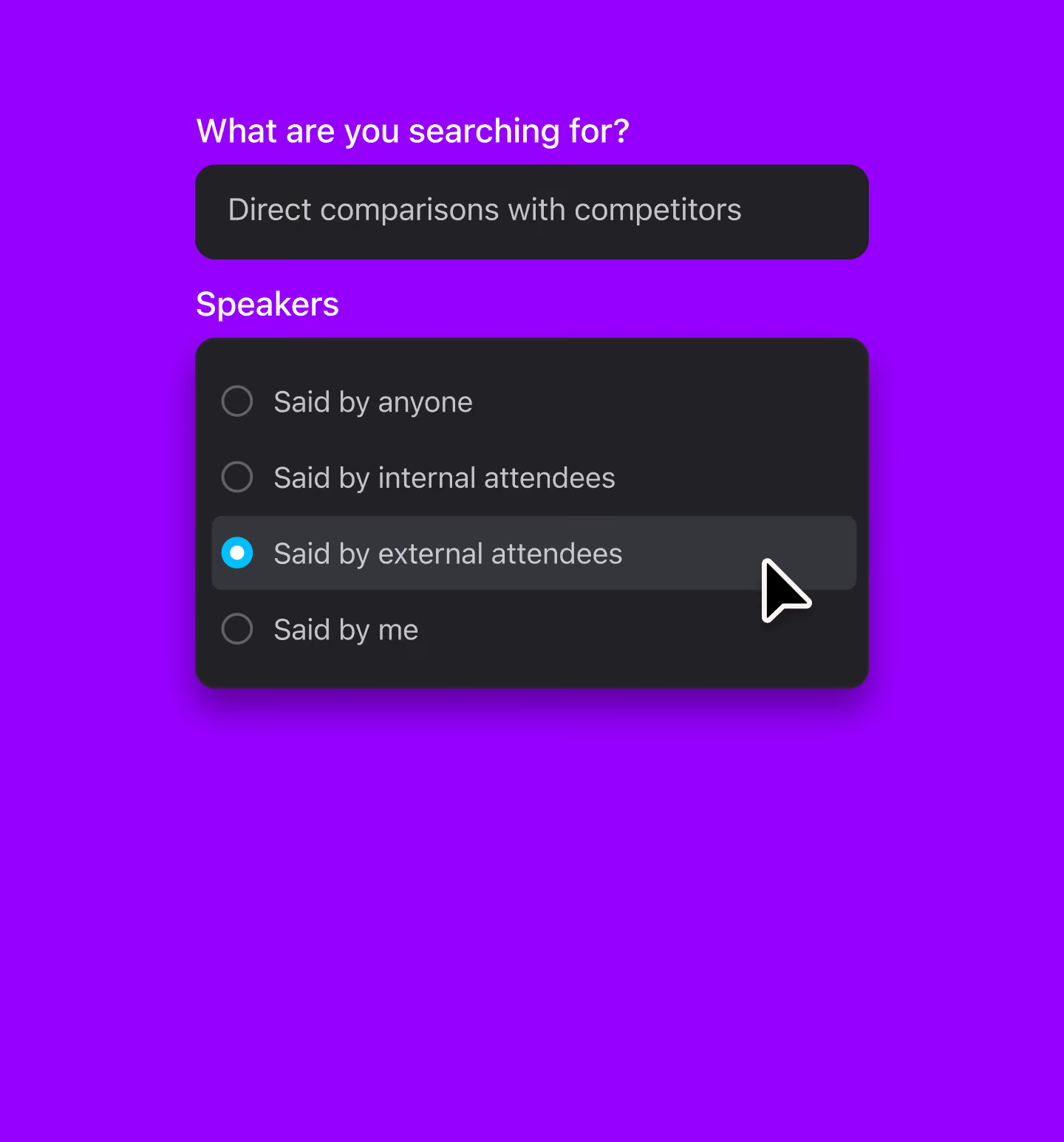
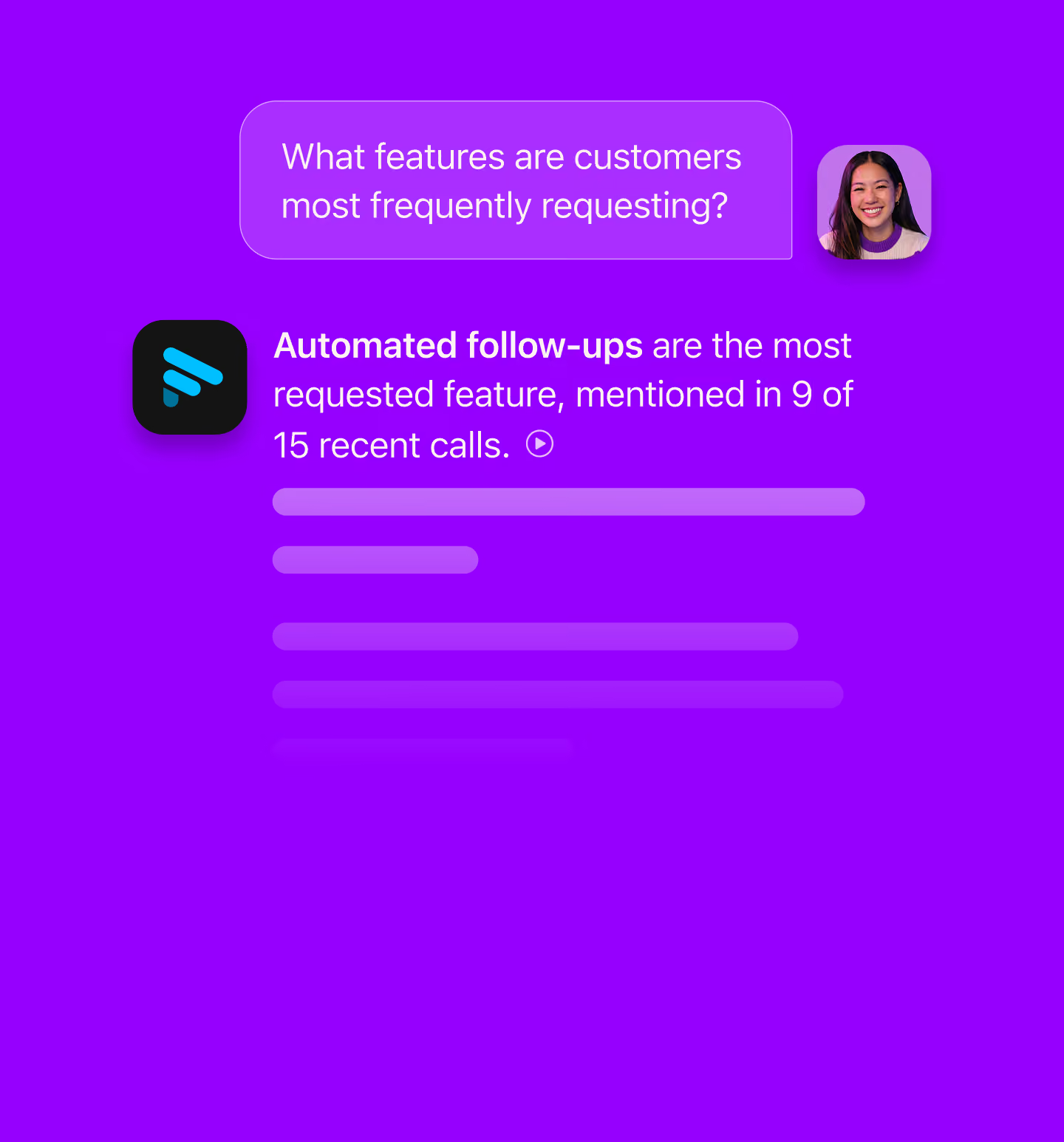
Ask Fathom which pain points come up most, how customers describe a problem, or why deals stall, and get a sourced answer from your team’s calls. Your next brief starts from what customers said.
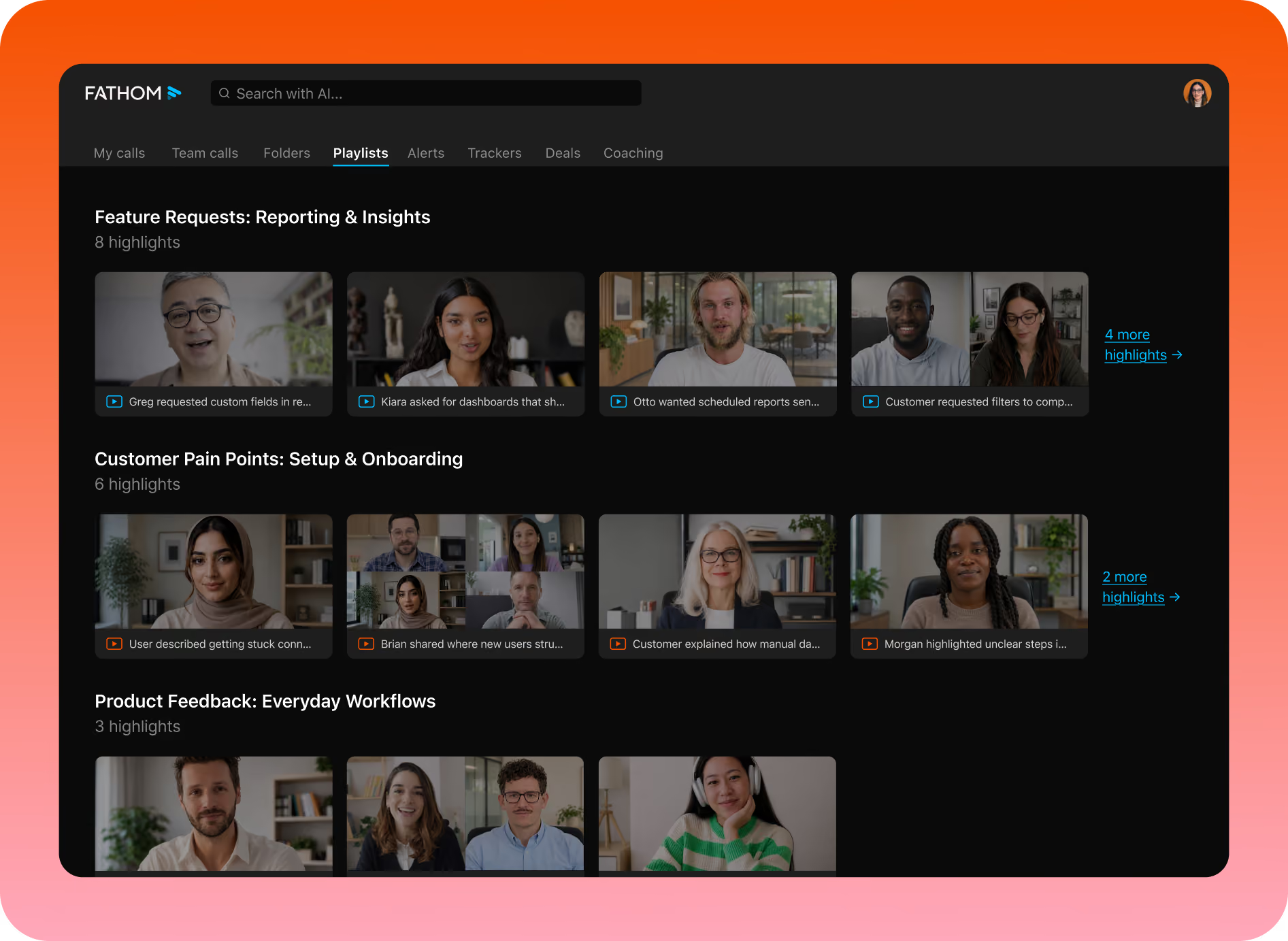
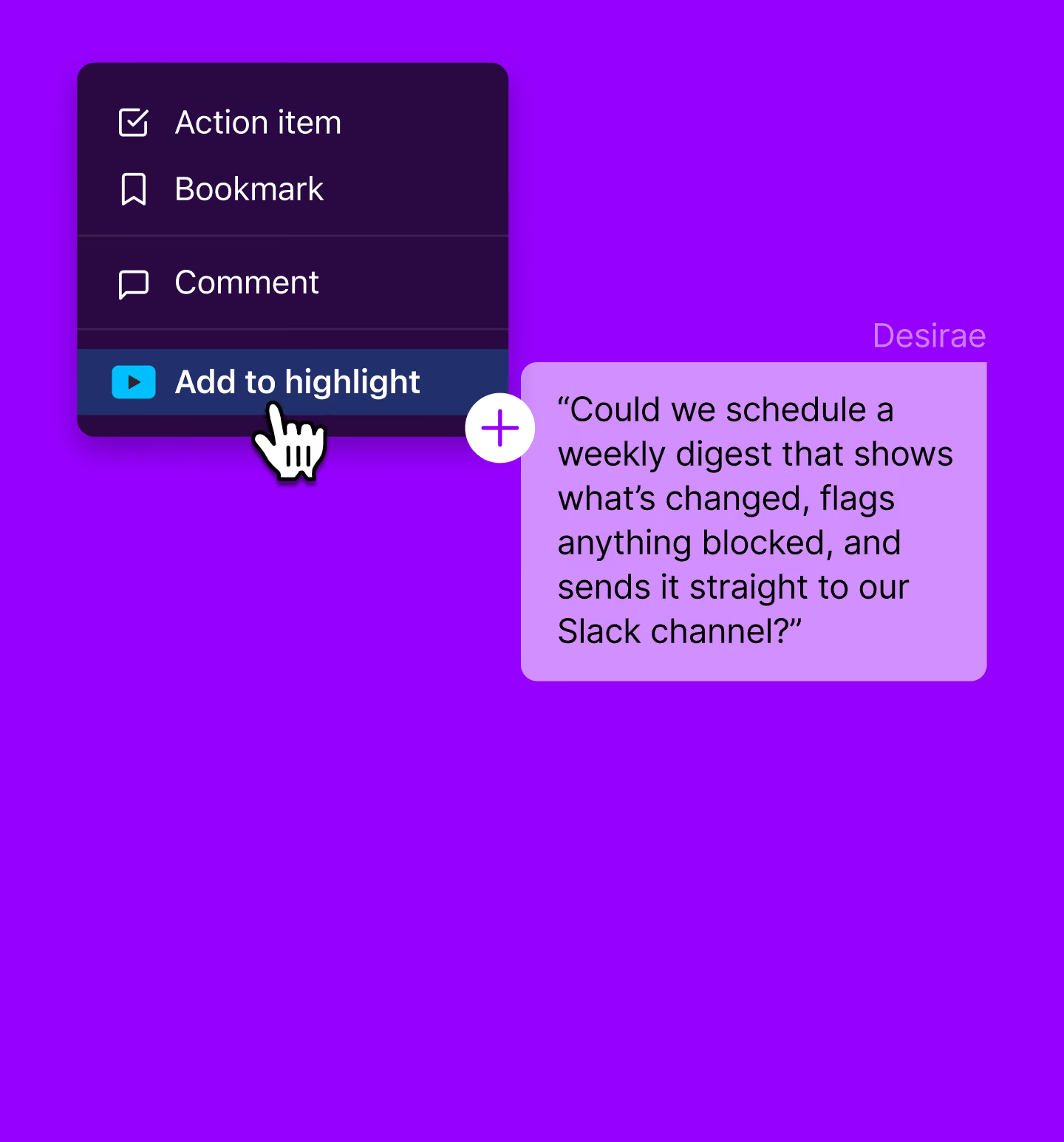
Clip the moment a customer describes the problem in their own words and add it to a Playlist. Share a reel of real customer voices with product, design, or leadership instead of an hour-long call.
Testimonials



It is much more stable and reliable than Copilot. Also, the customer support has been fantastic!
Carlos O.
CEO
The level of detail and the accuracy in the notes are truly impressive. This is much better than the built-in Zoom AI Companion!
Paul O.
Senior IT SRE Engineering Manager
I have been trying a number of different notetakers in the past 6 months (Read AI, Otter, Google Meet's Gemini) and Fathom provides far and away the best summaries post-meeting. I used to take my own notes alongside the other notetakers as my notes were generally better, but now I don't bother doing that any more!
Verified G2 User
Motion Pictures and Film
It’s such a nice experience to not worry about missing important notes or to do’s during calls I’m also a big fan of using fathom to transcribe sales calls, so I can gather valuable insights about my ideal clients. I recommend Fathom to all my friends and clients!
Luke
Owner
A real game changer for meetings. You can be focused in the meeting itself instead of taking notes or trying to remember tasks and topics after the call. Recap, summaries, highlights, recording, stats... that's a bunch of features that make everything easy and profitable for your business!
Eduardo K.
Country Sales Manager for Spain
Questions? We’ve got you covered.
A voice of customer program collects what customers say about your product and turns it into decisions for product, marketing, and leadership. Fathom builds yours from the customer calls your team already has: it flags requests, pain points, and praise as they come up and sends them to the teams that act on them.
Surveys capture what customers choose to tell you in a form. Customer calls capture how they describe their problems in their own words, unprompted. Fathom turns those conversations into voice of customer insights you can use alongside the feedback you already collect.
Create a Tracker for any theme, like a feature request, an onboarding pain point, or a reaction to new pricing. Fathom recognizes the idea in context, not only the keyword, and posts each moment to Slack or a weekly digest. Trackers apply to calls captured after the Tracker is created.
Yes. Ask Fathom which pain points come up most, how customers describe a problem, or why deals stall, and get a sourced answer from the calls you have access to. It’s the fastest way to fill in history from before you set up a Tracker.
Clip the moment a customer describes a problem in their own words and add it to a Playlist, or route a Tracker straight to a product channel in Slack. Teams hear the customer directly instead of reading a summary.
It works from conversations your team is already having, so there’s no separate survey to run. Fathom captures customer calls, tracks themes across them, answers questions with sources, and gets clips and quotes to the teams that need them.
Trackers are available to team members with view access to one or more teams’ meetings. Fathom only surfaces meetings you already have access to.
Trackers and Playlists of team calls are available on Fathom’s Team, Business, and Enterprise plans. Ask Fathom is on every plan, with team-wide search depending on your plan. See Fathom pricing for current plan details.